What Are the Different Types of Truck Scales? A Complete Guide
Choosing the right truck scale is essential for businesses that need accurate vehicle weighing, efficient operations, and reliable weight data. However, with different designs, weighing technologies, and installation methods available, selecting the right system can be challenging.
What are the different types of truck scales?
Truck scales can be classified by installation method, portability, weighing technology, and weighing method. Common options include pit-type truck scales, pitless truck scales, portable truck scales, axle scales, mechanical truck scales, and digital truck scales.
Each type offers different advantages depending on your industry, vehicle traffic, available space, weighing requirements, and budget.
In this guide, we explain the main types of truck scales, their applications, and the factors to consider before purchasing a truck weighbridge for your business.
If you are looking for a reliable truck scale solution, understanding these differences will help you choose the right equipment for your project.
1. What Are the Main Types of Truck Scales?
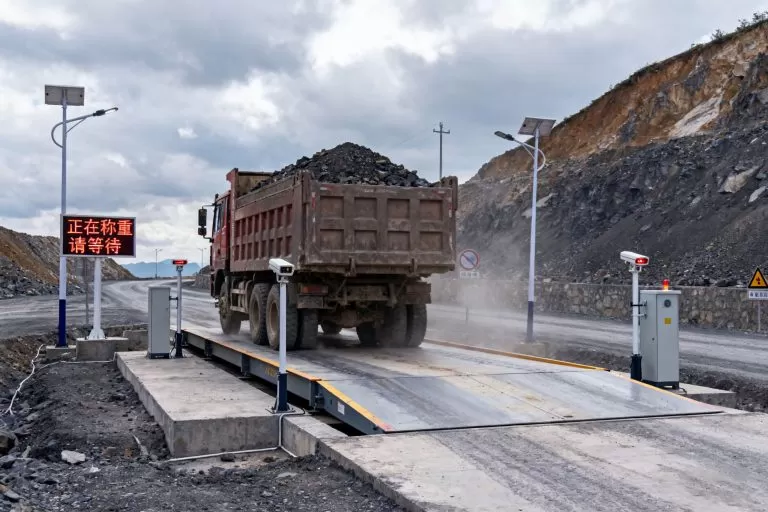
Truck scales, also known as truck weighbridges or vehicle weighing scales, are designed to measure the weight of trucks and their loads.
The main types include:
- Pit-type truck scales
- Pitless truck scales
- Portable truck scales
- Axle truck scales
- Mechanical truck scales
- Electronic and digital truck scales
These categories are not mutually exclusive. For example, a pitless truck scale can also be a digital truck scale. The best system depends on the installation environment, required weighing method, and operational needs.
2. Pit-Type Truck Scales

A pit-type truck scale is installed in a recessed foundation, allowing the weighing platform to sit approximately level with the surrounding ground.
This design is commonly used at industrial facilities where space is limited or where trucks need to drive onto the platform without using long approach ramps.
Key Advantages
- Level vehicle access without long above-ground ramps
- Suitable for many industrial and commercial weighing applications
- Can be integrated into existing site layouts
- Supports different platform dimensions and weighing capacities
Potential Limitations
Pit-type truck scales require excavation and a properly designed foundation. Drainage, waterproofing, and access for inspection and maintenance must also be considered.
Typical Applications
Pit-type truck scales are often considered for factories, logistics facilities, recycling centers, and other sites where a level installation is preferred.
Best for: Businesses that have limited ramp space and can accommodate the required foundation work.
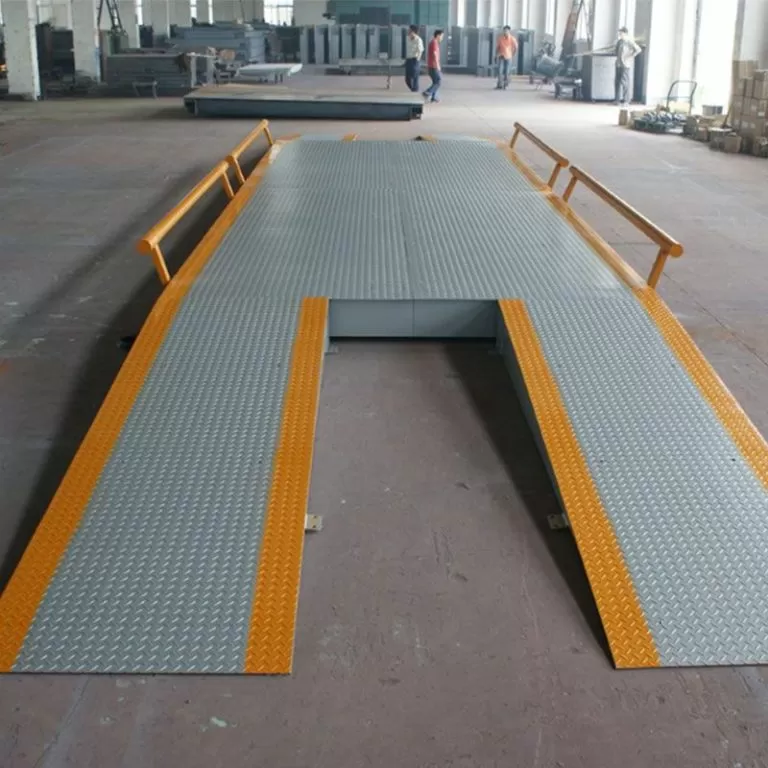
3. Pitless Truck Scales

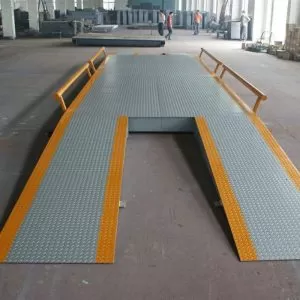
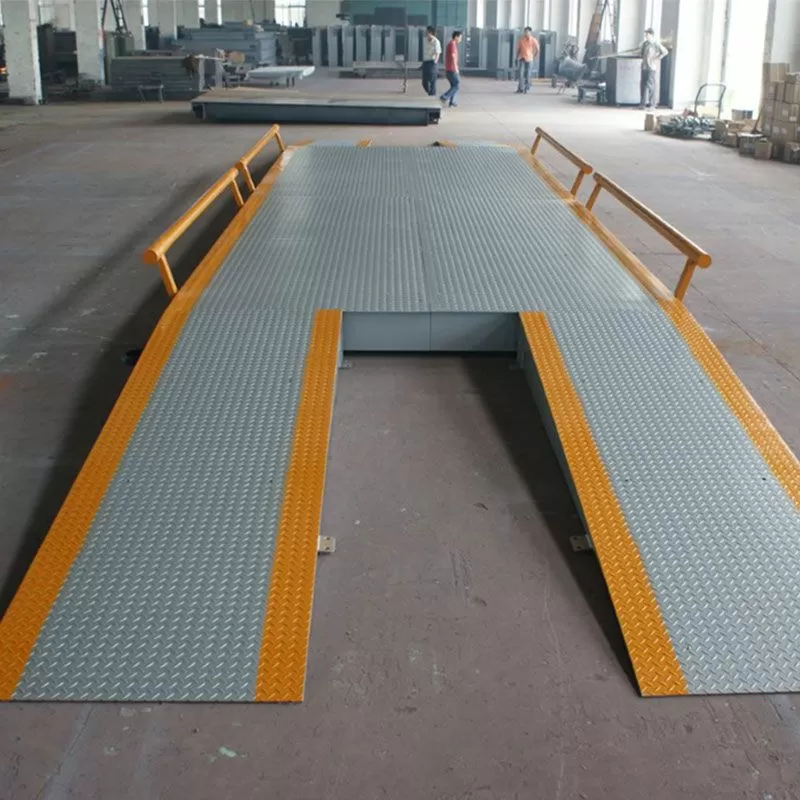
A pitless truck scale, also called an above-ground truck scale, is installed above the ground and typically uses approach ramps to guide vehicles onto the weighing platform.
It is a popular option for new installations where excavation is undesirable or where easier access to certain scale components is preferred.
Key Advantages
- Usually requires less excavation than a pit-type installation
- Can simplify access to some components for inspection
- Suitable for many outdoor industrial applications
- Can be installed at sites where below-ground construction is difficult
Potential Limitations
Pitless systems need sufficient space for approach ramps. Site leveling, drainage around the scale, and vehicle access must be carefully planned.
Typical Applications
Pitless truck scales are commonly considered for mines, construction material yards, farms, warehouses, and industrial plants.
Best for: Businesses with sufficient space for ramps that want to reduce below-ground construction requirements.
Pit-Type vs. Pitless Truck Scales
| Feature | Pit-Type Truck Scale | Pitless Truck Scale |
|---|---|---|
| Installation | Recessed foundation | Above-ground foundation |
| Approach ramps | Usually not required for level access | Usually required |
| Excavation | Generally greater | Generally lower |
| Space requirements | Can reduce ramp space | Requires ramp space |
| Maintenance access | Depends on pit design and access provisions | Often easier for accessible components |
| Key cost consideration | Excavation and drainage | Ramps and site layout |
Neither design is universally better. Compare the total installation cost, site conditions, drainage, maintenance access, and vehicle traffic before making a decision.
4. Portable Truck Scales
Portable truck scales are designed to be transported, relocated, or deployed at different weighing locations, depending on the system design.
Some portable systems use compact weighing platforms or axle-weighing equipment, while others are modular systems designed for temporary or relocatable installations.
Key Advantages
- Useful for temporary weighing operations
- Can support multiple work locations, depending on configuration
- May reduce the need for a permanent installation
- Suitable for certain mobile weighing and field applications
Potential Limitations
Portable systems may have different capacity, accuracy, setup, and throughput characteristics from permanent full-length weighbridges.
Buyers should confirm whether the system measures individual axle loads, axle groups, or the total vehicle weight, and whether it meets local legal-for-trade requirements.
Typical Applications
Portable truck scales may be suitable for temporary construction projects, agricultural operations, field inspections, and certain mobile weighing applications.
Best for: Businesses that need flexibility or temporary weighing capability rather than a permanently installed weighbridge.
5. Axle Truck Scales
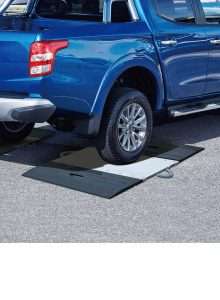
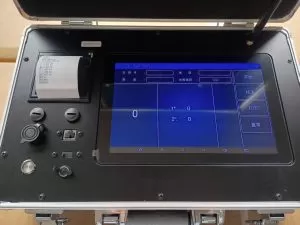
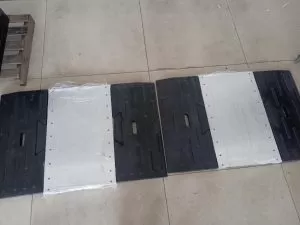
Axle truck scales measure the load applied by individual axles or axle groups. Depending on the equipment and operating procedure, they can be used for static axle weighing or certain forms of low-speed weighing.
They are often more compact than a conventional full-length truck scale.
Key Advantages
- Compact equipment footprint
- Useful for axle-load checks
- Can be suitable for mobile or roadside applications
- May offer a practical option where a full-length weighbridge is unnecessary
Potential Limitations
An axle scale does not automatically provide the same measurement as a full-vehicle weighbridge. Vehicle positioning, axle configuration, weighing procedure, and system design affect the result.
If the application requires an accurate gross vehicle weight for commercial transactions, confirm the approved weighing method and applicable regulations before selecting the equipment.
Typical Applications
Axle scales are used in fleet operations, vehicle load monitoring, transportation inspections, and selected industrial weighing applications.
Best for: Businesses that primarily need axle-load information or have specific space and mobility requirements.
6. Mechanical Truck Scales
Mechanical truck scales use mechanical weighing mechanisms, such as levers and linkages, to transfer the applied load to a weighing indicator.
They represent a traditional approach to vehicle weighing and may still be found in some established facilities.
Key Advantages
- Traditional mechanical design
- Can operate without the same electronic weighing architecture used by modern systems
- May be appropriate for certain existing installations
Potential Limitations
Mechanical systems can involve moving parts that require inspection and maintenance. Data recording, automation, and integration with modern weighing software may also be more limited unless additional systems are installed.
Typical Applications
Mechanical truck scales may be considered for certain legacy facilities or specialized applications where the existing weighing infrastructure is already designed around mechanical equipment.
Best for: Specific legacy or specialized applications where mechanical weighing remains appropriate.
7. Electronic and Digital Truck Scales
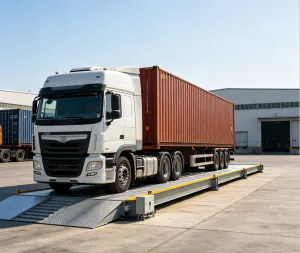
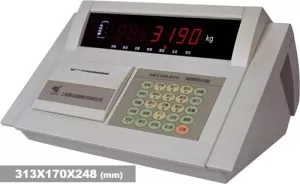
Electronic truck scales use load cells to convert applied weight into electrical signals. A weighing indicator or digital controller processes those signals and displays the measurement.
Digital truck scales can also support data management, vehicle identification, automated weighing, and integration with other business systems.
Key Advantages
- Clear digital weight display
- Can support automated data collection
- May integrate with weighing software and business systems
- Available with different load cell technologies and system configurations
- Suitable for many modern industrial weighing applications
Potential Limitations
Electronic systems require suitable power, wiring, grounding, and protection against environmental conditions. Maintenance and troubleshooting depend on the system architecture and component quality.
Typical Applications
Digital truck scales are widely considered for logistics centers, manufacturing plants, mining operations, agricultural facilities, and commercial weighbridges.
Best for: Businesses that need reliable weight readings, electronic records, and opportunities for weighing automation.
8. Digital Truck Scales vs. Analog Truck Scales
Digital and analog truck scales differ mainly in the technology used to transmit and process signals from the load cells.
Analog systems typically transmit analog signals from the load cells to a junction box and weighing indicator. Digital systems process weight signals digitally at the load cell or through digital weighing electronics, depending on the design.
| Feature | Analog Truck Scale | Digital Truck Scale |
|---|---|---|
| Signal processing | Analog signals | Digital signals |
| Diagnostics | Depends on indicator and system | May offer more detailed diagnostics |
| Troubleshooting | Requires system-specific testing | May support component-level diagnostics |
| Integration | Depends on available interfaces | May support advanced digital integration |
| Selection priority | System compatibility and value | Diagnostics, integration, and application needs |
Digital systems may offer useful diagnostic and integration features, but performance depends on the complete system design. Buyers should compare the specifications, serviceability, compatibility, and total cost rather than assuming that one technology is always superior.
9. How to Choose the Right Truck Scale for Your Business
The best truck scale depends on your weighing requirements and operating environment.
Before purchasing a truck weighbridge, consider the following factors.
Weighing Capacity
Determine the maximum gross vehicle weight and the types of trucks you need to weigh.
Common truck scale capacities include 30 tons, 50 tons, 60 tons, 80 tons, and 100 tons or more, depending on the application and local requirements.
The selected capacity must also account for axle loads, platform design, and applicable regulations.
Platform Dimensions
The platform must accommodate the length and width of the vehicles being weighed. Consider your largest vehicles, approach geometry, and site layout before confirming the dimensions.
Daily Weighing Volume
Facilities that weigh many trucks each day may benefit from automated identification, traffic lights, unattended weighing terminals, and weighing management software.
Installation Conditions
Assess the available space, soil conditions, drainage, access roads, and civil engineering requirements. These factors can significantly influence the total project cost.
Accuracy and Legal Requirements
If the scale is used for commercial transactions, check local requirements for verification, certification, and legal-for-trade weighing.
Maintenance and After-Sales Support
Ask the supplier about warranty coverage, spare parts, technical support, calibration or verification services, and maintenance procedures.
Choosing the right system from the beginning can help reduce unnecessary expenses and improve long-term operational efficiency.
10. What Is the Cost of Different Types of Truck Scales?
Truck scale prices vary according to the system design, capacity, platform dimensions, load cells, electronics, accessories, and installation scope.
Permanent pit-type and pitless weighbridges may require substantial civil engineering work, while portable or axle-weighing systems have different equipment and operating requirements.
When comparing prices, consider the complete project cost, including:
- Weighing equipment and accessories
- Freight and delivery
- Foundation and site preparation
- Installation and commissioning
- Electrical work and software
- Local taxes, customs duties, and certification where applicable
A low equipment price does not necessarily represent the lowest total project cost.
For a meaningful comparison, request quotations based on the same capacity, platform dimensions, component specifications, accessories, and service scope.
Need a truck scale price for your project? Contact our team with your required capacity and installation location to receive a customized proposal.
11. Why Choose a Professional Truck Scale Manufacturer?
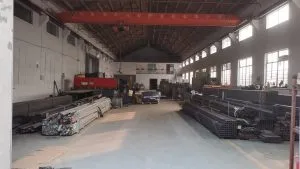
Working with an experienced truck scale manufacturer can help you select a configuration that meets your operational and technical requirements.
When evaluating a supplier, consider:
- Product range and customization capabilities
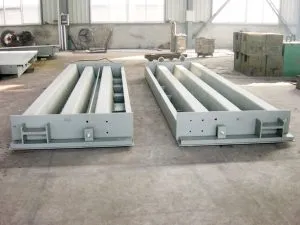
- Platform design and load cell specifications
- Quality control and testing procedures
- Relevant certifications and documentation
- Export packaging and shipping arrangements
- Warranty, spare parts, and technical support
- Installation guidance and after-sales service
For distributors and project contractors, consistent product specifications, dependable communication, and access to technical documentation are also important.
Ask suppliers to provide a detailed technical proposal so you can compare equipment configurations and project costs accurately.
12. Get a Customized Truck Scale Solution
Now that you understand the different types of truck scales, the next step is to identify the right system for your business.
Whether you need a pit-type weighbridge, a pitless truck scale, a portable weighing system, an axle scale, or a digital truck weighing solution, the right configuration depends on your vehicles, site conditions, and weighing requirements.
Our team can help you evaluate suitable options and prepare a quotation based on your project specifications.
Contact us today to discuss your truck scale requirements.
To receive a more accurate quotation, please provide:
- Required capacity: 60 tons, 80 tons, 100 tons, or another capacity
- Platform dimensions: Length and width, if known
- Scale type: Pit-type, pitless, portable, axle, or not yet decided
- Quantity: Number of systems required
- Destination: Country and installation location
- Additional requirements: Digital load cells, weighing software, automation, or other accessories
Send us your requirements to receive a tailored recommendation and discuss pricing, delivery, and technical support.
Frequently Asked Questions
What are the most common types of truck scales?
The most common categories include pit-type truck scales, pitless truck scales, electronic or digital truck scales, portable truck scales, and axle scales. The best choice depends on installation conditions and the weighing application.
What is the difference between a pit-type and a pitless truck scale?
A pit-type truck scale is installed in a recessed foundation, while a pitless truck scale is installed above ground and generally uses approach ramps. Pit-type systems may require more excavation, whereas pitless systems require adequate ramp space.
Which truck scale is best for industrial use?
For many industrial applications, a permanent electronic weighbridge is a practical option. The choice between pit-type and pitless installation depends on site layout, traffic volume, drainage, and maintenance requirements.
Are portable truck scales accurate?
Portable truck scales can provide useful weight measurements when properly selected, installed, operated, and maintained. Accuracy depends on the equipment design, weighing procedure, calibration or verification status, and applicable requirements.
What capacity truck scale do I need?
Select a capacity based on the maximum gross vehicle weight, axle loads, vehicle dimensions, and applicable regulations. A qualified supplier can help you determine the appropriate system specifications.
How do I get a quotation for a truck scale?
Provide your required capacity, platform dimensions, destination country, quantity, and installation preferences. A supplier can then recommend a suitable configuration and prepare a project-specific quotation.
Ready to choose the right truck scale for your business? Contact our team today for a customized solution and quotation.